3D Printing Material Certification for Industrial Functional Parts
Verification documentation accompanying production parts to confirm polymer grades, supplier datasheets, and baseline physical properties. Purpose-built for engineering jigs, production fixtures, mechanical enclosures, and functional end-use assemblies.
Quality Support Portfolio
Available Documentation & Verification Deliverables
RapidPrintParts provides structured quality support packages arranged on a per-project agreement. Quality documents are configured during engineering review and are not automatically included on standard runs.
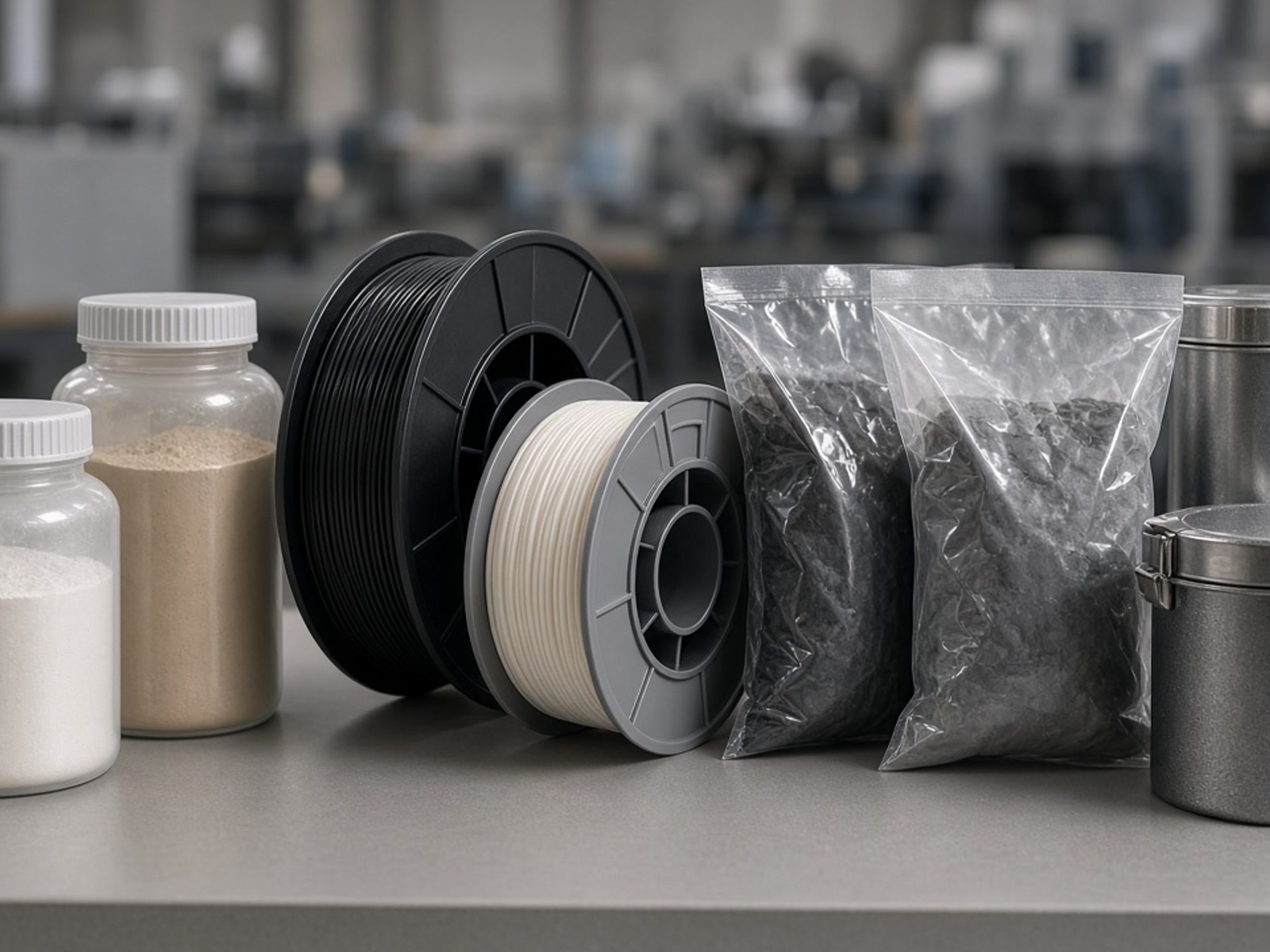
Material Grade Records
Formal documentation detailing the raw polymer grade, manufacturer technical datasheets, lot tracking, and declared physical baseline specifications.
Certificates of Conformity (CoC)
Production certificates declaring that the manufactured batch complies with agreed CAD revisions, polymer selections, and order requirements.
First Article Inspection (FAI)
Systematic inspection reports of initial production units verifying critical geometries and setup parameters prior to full volume processing.
Dimensional Inspection Reports
Calibrated measurement data validating customer-defined critical-to-quality dimensions across representative sampling lots.
Shipment & Traceability Reports
Dispatch verification sheets linking specific build runs, material lot identifiers, and packaging inspections to outgoing consignments.
Project-Defined Verification
Additional quality deliverables can be scoped for ongoing functional programs upon technical review of technical drawing requirements.
Scope of Operations
In-House Polymer Processes & Tolerances
Documentation requests apply strictly to our internal industrial polymer additive technologies. Metal additive manufacturing is an external topic and is not an in-house capability.
Validated Polymers
ABS, ASA, PC, PA, PA-CF, PETG, TPU, PEEK
Typical Tolerance Ref.
±0.2 mm or ±0.3 %
Validated Polymers
Engineering Resins (Tough, High Temp, Rigid)
Typical Tolerance Ref.
±0.1 mm or ±0.2 %
Validated Polymers
PA12, PA11, PA12 GF, TPU
Typical Tolerance Ref.
±0.3 mm or ±0.3 %
Validated Polymers
PA12, PA11, PA12 GF, TPU
Typical Tolerance Ref.
±0.2 mm or ±0.3 %
Technical Inputs
Practical Selection Factors for Material Certification
To assess documentation feasibility and ensure process validation, provide comprehensive technical inputs when submitting your project:
-
Operating Environment: Static and dynamic mechanical loads, continuous service temperature ranges, chemical/fluid exposures, UV, or flammability requirements.
-
Material & Grade Preferences: Target polymer base (e.g., PEEK, PA12, PA-CF) and explicit manufacturer or brand grade mandates if specified by engineering drawings.
-
Critical Dimensions & Quantities: Drawing callouts indicating tight-tolerance datum structures and target production batch volumes.
-
Finishing & Post-Processing: Subsequent surface treatments including vapor smoothing, media blasting, dyeing, painting, or secondary CNC machining.
-
Target Lead Times: Quality inspection and report compilation require dedicated setup steps and schedule coordination.
Compliance Boundaries
Scope Limitations & Disclosures
Data Origin: Material certificates and certificates of conformity provided by RapidPrintParts reflect raw resin supplier documentation combined with internal batch processing records.
Regulatory Scope: These documents verify standard polymer industrial traceability and do not constitute certified documentation for strictly regulated industries (such as FAA/EASA flight airworthiness or FDA medical implant compliance).
Secondary Operations: Downstream operations such as dyeing, heat treatment, vapor polishing, or CNC finishing can alter surface hardness, tensile properties, or dimensional accuracy. Documentation parameters must be aligned with the exact production stage.
Program Applicability: Not every additive part requires formal documentation packages. Non-critical prototypes or low-risk visual models proceed under standard industrial process controls.
Request an Engineering Review & Material Documentation
Submit your STEP/STP 3D models alongside technical application requirements, operational environment specifications, and requested quality deliverables. Our engineering team will review feasibility and provide a tailored verification proposal.
Contact RapidPrintParts
Get in Touch
We are here to answer your questions about industrial additive manufacturing and functional 3D printed parts. Reach out to us through the following methods:
Email: [email protected]
Address: No. 17-1, Guanlan Avenue, Longhua District, Shenzhen, Guangdong Province, Shenzhen 3D Printing Industrial Park