
Consumer Electronics 3D Printing for Functional Parts & Prototypes
RapidPrintParts produces polymer-based functional components and structural housings engineered to support rigorous consumer electronics hardware development. We evaluate critical operating parameters—material performance, mechanical load, thermal resistance, precision tolerance, and target lead time—to advance designs from prototype to pilot run.
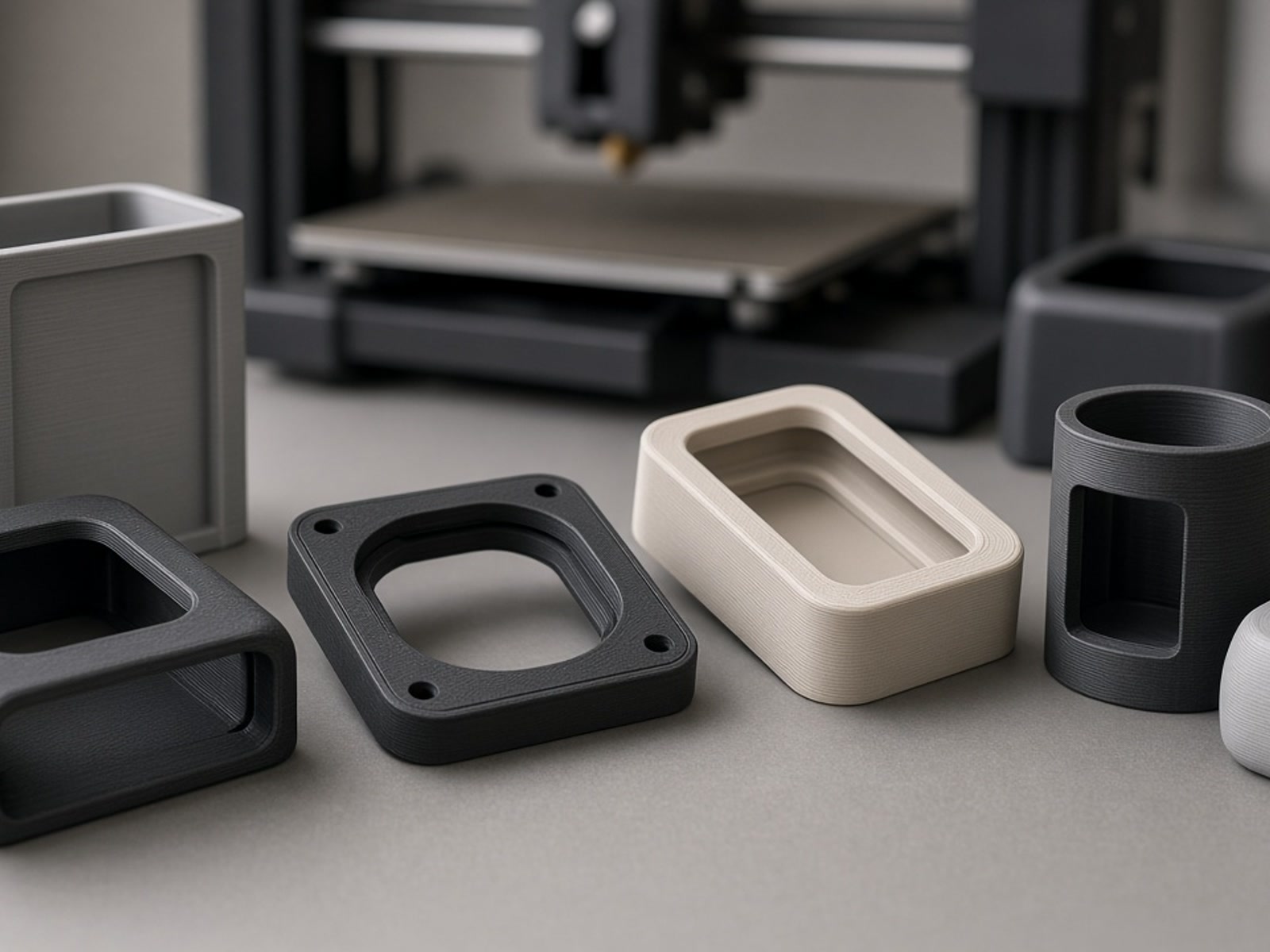
Functional Applications for Hardware Programs
Additive manufacturing at RapidPrintParts targets real mechanical and thermal stress conditions rather than non-functional concept display models.
Housings & Chassis
Durable exterior housings and test shells for device validation, internal layout fitment, and drop-impact assessments.
Internal Brackets & Mounts
Rigid or reinforced structural mountings, PCB carriers, snap-clips, and battery retention frames requiring specific stiffness.
Ducts & Assembly Aids
Thermal airflow routing ducts, customized assembly jigs, nest fixtures, and protective sensor guards for pilot assembly lines.
Bridge-Production Units
Low-volume end-use parts and bridge production components to satisfy market testing before hard tooling is cut.
In-House Polymer Processes & Materials
RapidPrintParts deploys four polymer additive technologies. Build envelopes and baseline tolerances vary by geometry; guaranteed tolerances require engineering review.
FDM / FFF
ExtrusionConfigured for robust mechanical fixtures, equipment parts, high-heat components, and large structural enclosures.
SLA
PhotopolymerOptimized for high-detail cosmetic checks, smooth surface finish requirements, and precise inter-part fit validation.
SLS
Powder BedProduces self-supporting, intricate geometries and durable end-use components with balanced isotropic properties.
MJF
Multi Jet FusionWell-suited for low-volume functional production batches requiring dense mechanical structures and uniform strength.
Practical Selection Factors
Choosing the optimal additive process for consumer hardware depends on technical tradeoffs between mechanical thresholds, cosmetic demands, and program volume.
-
/
Operating Environment: Evaluation of continuous thermal exposure, solvent or chemical contact, and continuous structural load.
-
/
Mechanical Properties: Targeting required rigidity, elongation at break, impact resistance, or elastomeric flexibility.
-
/
Tolerance & Surface Finish: Distinguishing aesthetic exterior boundaries from internal non-critical clearances.
-
/
Batch Volume & Schedule: Aligning unit quantities, recurring build schedules, and delivery milestones.
Post-Processing & Finishing
Secondary operations are applied when components require enhanced cosmetic presentation or precise assembly mating.
Design Inputs & Process Limitations
Required Engineering Data
Provide native 3D CAD files in STEP/STP format alongside a 2D PDF drawing detailing non-standard tolerances, datum surfaces, and critical dimensions.
Geometry & Process Fit
Unconstrained, organic geometries typically benefit from powder-bed technologies (SLS/MJF), while broad structural covers and high-temp requirements align with FDM.
Feasibility Verification
Not all geometries, tight press-fits, or extreme thermal criteria can be met directly. An in-depth engineering assessment validates technical feasibility prior to production.
Submit Details for Technical Assessment
Send your part files and operational constraints to receive a thorough manufacturability review and process recommendation from our engineering team.
- 3D CAD geometry in STEP / STP format
- 2D drawing indicating critical dimensions & tolerances
- Thermal, chemical, or mechanical operating parameters
- Target quantity, material preference, and delivery window
Contact RapidPrintParts
Get in Touch
We are here to answer your questions about industrial additive manufacturing and functional 3D printed parts. Reach out to us through the following methods:
Email: [email protected]
Address: No. 17-1, Guanlan Avenue, Longhua District, Shenzhen, Guangdong Province, Shenzhen 3D Printing Industrial Park