Tough Resin 3D Printing for Functional Prototypes and Industrial Parts
RapidPrintParts utilizes stereolithography (SLA) platforms with specialized engineering resins to deliver components that satisfy rigorous mechanical, dimensional, and fit criteria. Formulated for elevated impact resistance, tough resin bridges the gap between high-detail surface fidelity and real-world durability.
Target Applications & Industry Use Cases
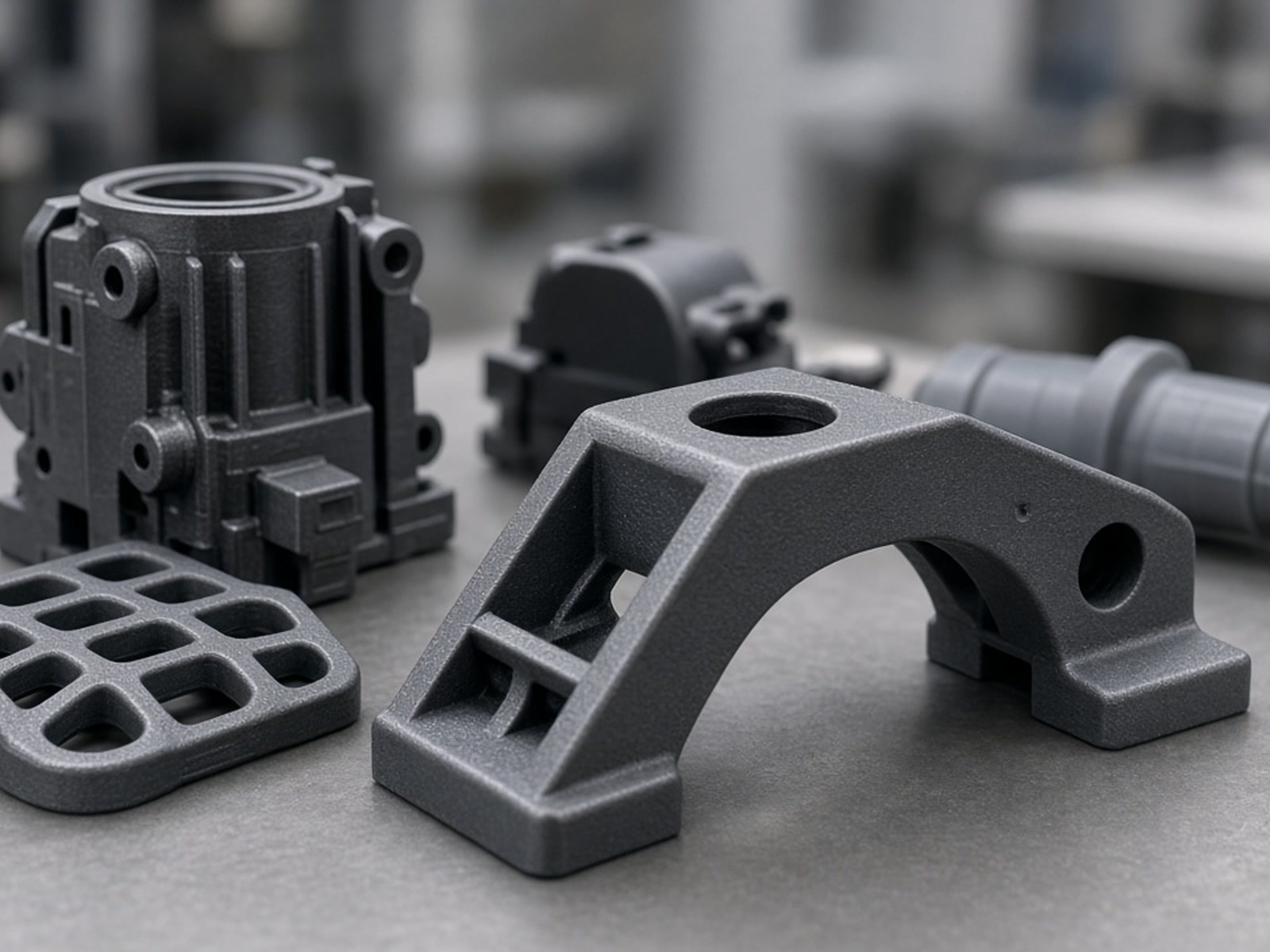
Tough resin components are engineered for functional engineering validation where standard SLA photopolymers are prone to brittle failure under cyclic stress or installation loads.
Mechanical Mounts & Housings
Durable brackets, sensor housings, and custom enclosures built to handle mechanical fastening, snap fits, and direct functional integration during prototype testing.
Functional Fit-Checks & Proofing
High-accuracy dimension checks for complex kinematics, robotics sub-assemblies, and mating components requiring geometric accuracy alongside deflection resistance.
Tooling Aids & Bridge Production
Assembly jigs, alignment fixtures, and low-volume pilot components serving MRO and shop-floor operations prior to final mold release and production retooling.
Material and Process Selection Parameters
Selecting tough resin over alternative polymer additive systems depends on precise mechanical trade-offs. RapidPrintParts evaluates every submission against key application inputs.
Operating Environment & Stress Profile
Assessment of continuous mechanical loads, cyclical impact, ambient temperature ranges, and intermittent exposure to moisture, cutting fluids, or industrial solvents.
Volume Scale & Batch Strategy
Evaluation of part batch size—determining whether the geometry is an isolated one-off engineering proof or an operational bridge run requiring cross-build consistency.
Dimensional Interfaces & Secondary Operations
Review of critical tolerances, surface finish specifications, and downstream secondary processing requirements such as manual tapping, threaded brass insert installation, or mating seals.
Resolution & Process Trade-offs
Determining whether the geometry leverages SLA's smooth micro-layer surfaces and sharp edge definition, or if structural performance would better align with powder-bed fusion.
Design Inputs & Reference Tolerances
Adhering to stereolithography design principles ensures dimensional compliance and predictable structural integrity in functional resin builds.
Submit native 3D geometry in STEP (.step) or STP (.stp) formats accompanied by an engineering 2D drawing detailing critical inspection points, functional loads, and expected units.
Process Envelope & Technical Thresholds
Engineering Boundaries & Process Limitations
Transparent technical boundaries prevent downstream failure. While tough resin offers superior mechanical strength relative to standard SLA resins, functional constraints must be considered.
Thermal & Mechanical Ceilings
Tough photopolymers remain light-cured thermoset polymers. They are not suited for continuous high-temperature duty, sustained heavy structural loads, or environments governed by strict flame-retardant certifications without dedicated qualification.
Creep & Environmental Aging
Long-term performance requires evaluation for creep under continuous static deflection. Prolonged direct outdoor UV radiation and continuous solvent immersion may degrade mechanical properties over extended service cycles.
Alternative Technologies
When part scale exceeds the maximum ~600 × 600 × 400 mm envelope, or production volumes demand high-throughput nesting without support structures, RapidPrintParts routes parts to SLS, MJF, or industrial FDM processes.
Request an Engineering Review
Submit your CAD model and operational parameters for a comprehensive manufacturing assessment. Our technical team evaluates part geometry, critical tolerances, and mechanical requirements to confirm if tough resin SLA or an alternative additive process best fits your application.
- • STEP or STP geometry with matching 2D prints for critical dims
- • Expected load conditions, temperature, and chemical exposure
- • Batch quantity and delivery schedule requirements
Contact RapidPrintParts
Get in Touch
We are here to answer your questions about industrial additive manufacturing and functional 3D printed parts. Reach out to us through the following methods:
Email: [email protected]
Address: No. 17-1, Guanlan Avenue, Longhua District, Shenzhen, Guangdong Province, Shenzhen 3D Printing Industrial Park