
17-4PH Stainless Steel 3D Printing: Material Properties and Industrial Considerations
17-4PH is a precipitation-hardening martensitic stainless steel valued for its combination of corrosion resistance and high strength after heat treatment. In additive manufacturing, the alloy is typically processed via powder-bed fusion methods that reach the temperatures needed to consolidate metal powder.
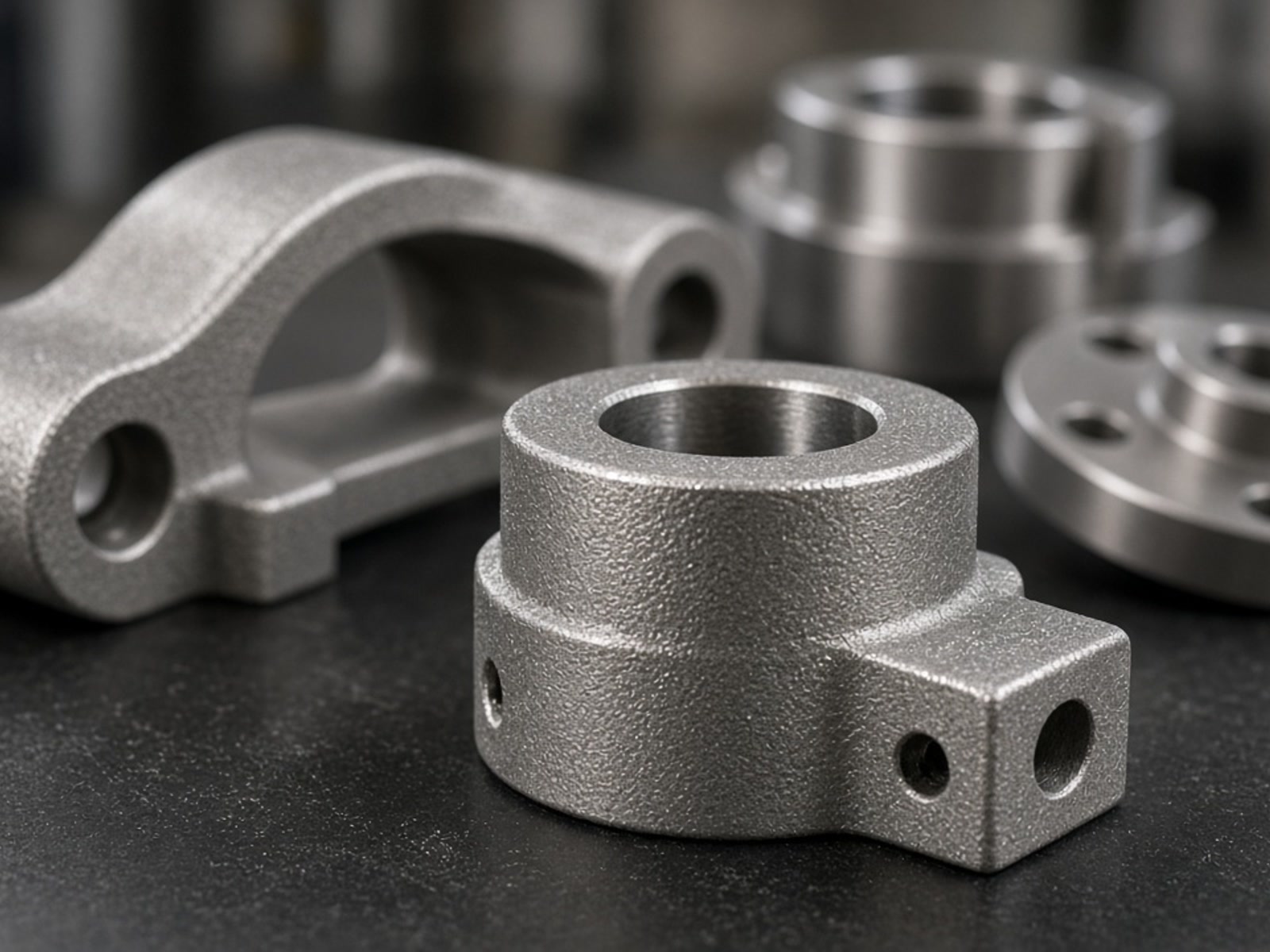
Key Material Characteristics
The alloy's behavior is defined by how it responds to thermal treatment and how that response shapes mechanical and environmental performance.
Strength and Hardness
High tensile strength and hardness achievable through solution treatment followed by aging.
Corrosion Resistance
Good corrosion resistance in many industrial environments compared with standard martensitic grades.
Heat Treatment Response
Response to heat treatment that allows tailoring of mechanical properties such as yield strength and toughness.
Magnetic Behavior
Magnetic behavior after hardening, which may influence certain applications.
Industrial Application Contexts
17-4PH parts produced by additive manufacturing appear in functional components where both strength and moderate corrosion resistance are required.
Because the material can be heat-treated after printing, it supports parts that need higher performance than typical polymer solutions.
- Tooling inserts
- Mechanical brackets
- Fluid-handling fixtures
- Low-volume replacement hardware
These components must withstand mechanical loads or moderate temperatures, which is where the alloy's heat-treatable performance profile becomes relevant.
Design and Process Selection Factors
Engineers evaluating 17-4PH for additive manufacturing consider several inputs before committing to a build strategy.
Operating Conditions
Operating loads, temperature range, and chemical exposure.
Finish and Machining
Required surface finish and any secondary machining allowances.
Build Orientation
Build orientation effects on mechanical properties and residual stress.
Post-Build Heat Treatment
Post-build heat-treatment schedules that affect final dimensions and hardness.
Quantity and Repeatability
Quantity and repeatability needs that determine whether additive manufacturing remains economical versus conventional routes.
Guaranteed tolerances and surface specifications always require engineering review because they depend on geometry, orientation, and finishing steps.
Limitations and Practical Constraints
Metal additive manufacturing of 17-4PH involves powder handling, controlled atmospheres, and thermal post-processing that differ significantly from polymer processes.
Part size is limited by available build envelopes, and certain thin-wall or lattice features may require support structures that affect surface quality.
Not all geometries are suitable without redesign, and material certification or lot traceability must be agreed upon for each project.
Process Environment
Powder handling, controlled atmospheres, and thermal post-processing.
Geometry Limits
Build envelope constraints and support structures for thin-wall or lattice features.
Documentation
Material certification and lot traceability agreed per project.
When to Request an Engineering Review
Provide the part's application environment, critical dimensions, load or temperature requirements, and target quantity so that suitability of 17-4PH can be assessed against available processes and post-processing options.
- Application environment and chemical exposure
- Critical dimensions and required surface finish
- Load or temperature requirements
- Target quantity and repeatability needs
Request an Engineering Review
Submit your application environment, critical dimensions, load or temperature requirements, and target quantity to begin the assessment.
Contact RapidPrintParts
Get in Touch
We are here to answer your questions about industrial additive manufacturing and functional 3D printed parts. Reach out to us through the following methods:
Email: [email protected]
Address: No. 17-1, Guanlan Avenue, Longhua District, Shenzhen, Guangdong Province, Shenzhen 3D Printing Industrial Park