
Industrial Additive Manufacturing
3D Printing Applications for Functional Industrial Parts
RapidPrintParts produces functional prototypes, jigs and fixtures, mechanical components, replacement parts, low-volume end-use parts, and bridge-production components using additive manufacturing. Before recommending a process, the team evaluates actual operating requirements including material, load, temperature, tolerance, finish, quantity, and lead time.
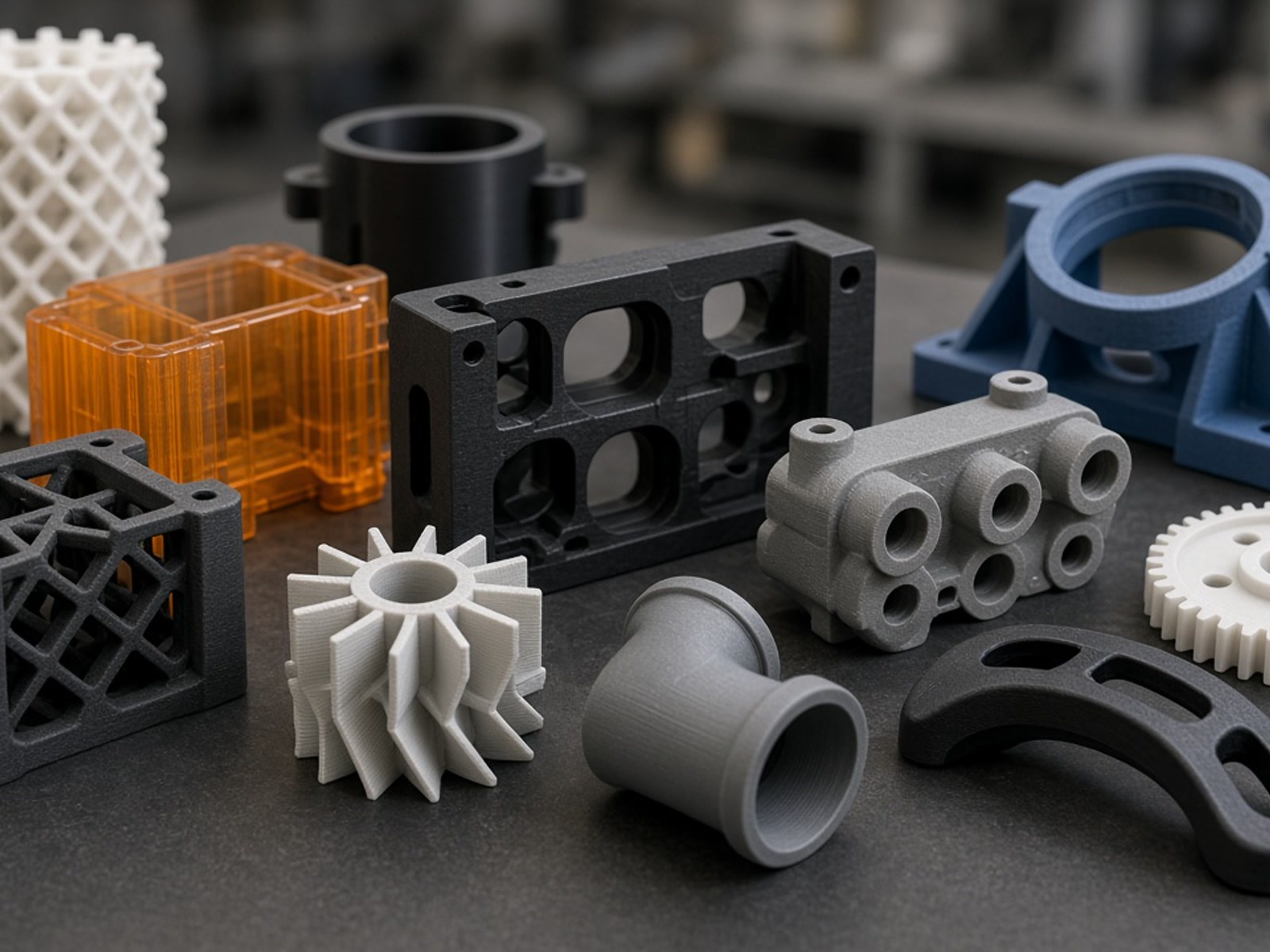
Typical Industrial Applications
These applications align with recurring demand for custom parts, product-development cycles, low-volume production, and spare-parts libraries where speed, complexity, or tooling avoidance provides value.
Machinery & Automation OEMs
Fixtures, guards, ducts, brackets, and custom replacement parts for production equipment.
Robotics Integrators
EOAT, grippers, and sensor brackets for line upgrades and rapid iteration.
Industrial Hardware Teams
Functional prototypes and low-volume end-use parts during EVT, DVT, and PVT stages before tooling.
MRO & Spare-Parts Programs
Obsolete components and urgent low-quantity replacements supported by additive manufacturing.
Contract Manufacturers & Print Bureaus
Overflow capacity or missing processes to keep production schedules on track.
Where Additive Adds Value
Custom parts, product-development cycles, low-volume production, and spare-parts libraries.
Process Selection for Functional Parts
RapidPrintParts operates four in-house polymer processes, each matched to different geometry, durability, and volume requirements.
FDM / FFF
Large & StructuralFixtures, large structures, and equipment parts.
Materials: ABS, ASA, PC, PA, PA-CF, PETG, TPU, PEEK
Typical build envelope: approx. 1,000 × 600 × 600 mm
SLA
High DetailHigh-detail prototypes and fit or appearance validation using engineering resins.
Typical build envelope: approx. 600 × 600 × 400 mm
SLS
Durable NylonComplex durable nylon parts and low-volume production.
Materials: PA12, PA11, TPU
Typical build envelope: approx. 380 × 380 × 600 mm
MJF
Low-Volume End-UseLow-volume end-use and functional nylon parts.
Materials: PA12, PA11, PA12 GF, TPU
Typical build envelope: approx. 380 × 284 × 380 mm
Post-Processing Options
Options may include blasting, sanding, polishing, vapor smoothing, dyeing, painting, marking, inserts, tapping, drilling, and CNC secondary machining.
Practical Selection Factors
Engineers evaluate material performance against load, temperature, chemical exposure, flame, or ESD requirements. Quantity and repeat demand influence process choice, as does target lead time. Finish requirements and any secondary operations are confirmed during quoting.
Reviewed During Quoting
- •Material performance vs. operating conditions
- •Quantity, repeat demand, and target lead time
- •Critical dimensions and tolerances
- •Finish requirements and secondary operations
Typical Reference Tolerances
| Process | Typical Reference Value |
|---|---|
| FDM | ±0.2 mm or ±0.3 % |
| SLA | ±0.1 mm or ±0.2 % |
| SLS | ±0.3 mm or ±0.3 % |
| MJF | ±0.2 mm or ±0.3 % |
Guaranteed tolerance requires engineering review.
Design Inputs and Limitations
Clear technical inputs help the engineering team assess feasibility and recommend the right process.
Useful Technical Information
- •Application and operating environment
- •Material needs
- •Critical dimensions
- •Load or environmental requirements
- •Finish specifications
- •Target milestones
- •Files as STEP/STP with a 2D drawing when available
Outside Typical Scope
- •Parts that are simple or very high volume
- •Parts better suited to molding or stamping
- •Consumer, decorative, or appearance-only requests without engineering requirements receive lower priority
Engineering Review
Submit your part geometry and application details for a technical assessment. The engineering team reviews material suitability, process options, tolerance feasibility, and post-processing needs before providing a quote.
What to Include
- •Application and operating environment
- •Material, load, and temperature requirements
- •Critical dimensions and finish specifications
- •Quantity and target milestones
- •STEP/STP files with a 2D drawing when available
Contact RapidPrintParts
Get in Touch
We are here to answer your questions about industrial additive manufacturing and functional 3D printed parts. Reach out to us through the following methods:
Email: [email protected]
Address: No. 17-1, Guanlan Avenue, Longhua District, Shenzhen, Guangdong Province, Shenzhen 3D Printing Industrial Park