Secondary Process Overview
3D Printing Electroplating: Engineering Considerations for Polymer Parts
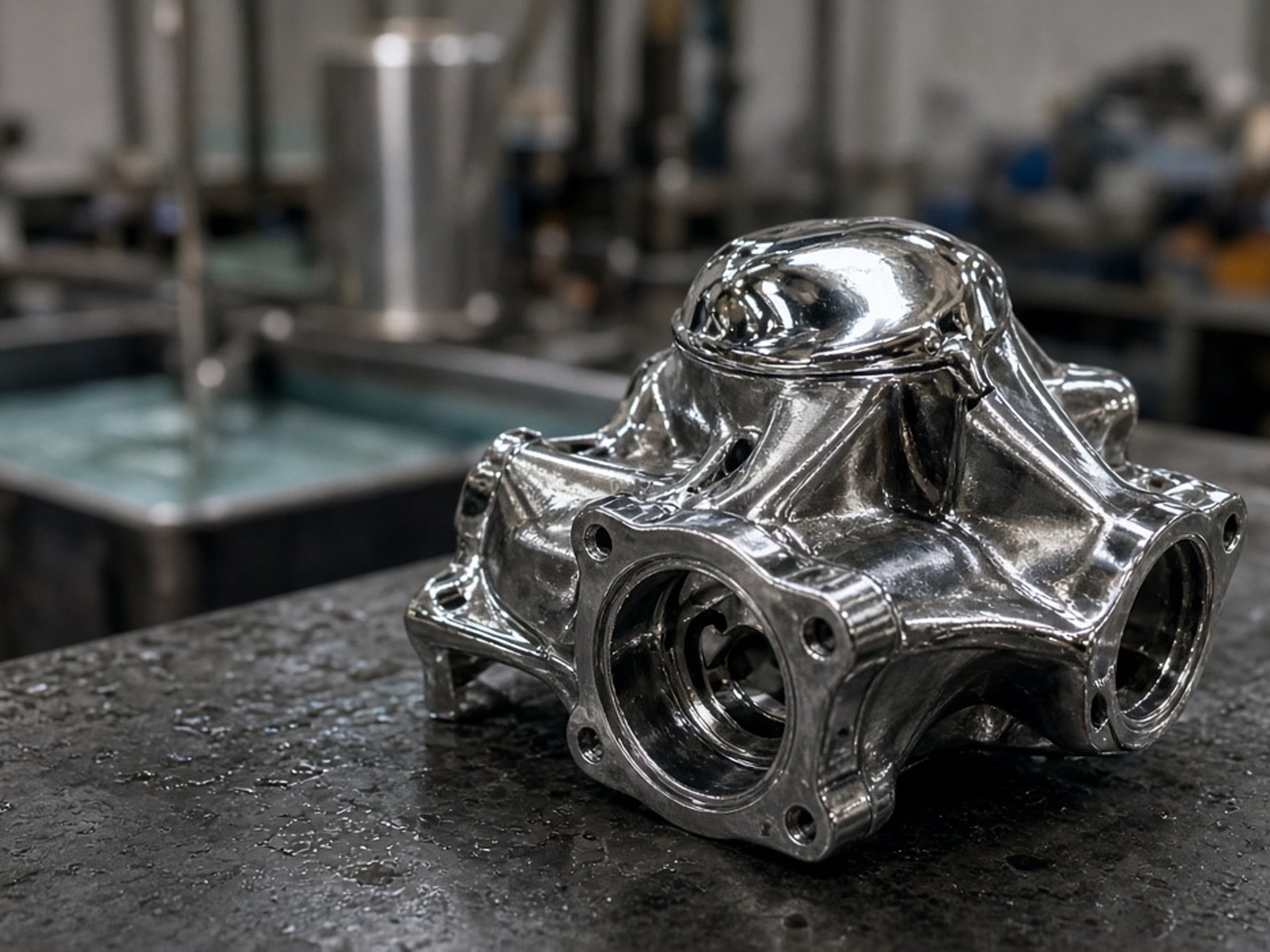
In industrial manufacturing, electroplating 3D printed parts is a specialized secondary process used to provide a metallic finish, improve surface hardness, or enhance electrical conductivity on non-conductive polymer substrates.
RapidPrintParts focuses on additive manufacturing processes — including FDM, SLA, SLS, and MJF. This overview helps engineers understand the complexities of combining additive manufacturing with electroplating.
Understanding the Electroplating Process
Electroplating involves depositing a thin layer of metal onto a surface via an electrolytic process. Because standard 3D printing materials — such as ABS, nylon, or resin — are non-conductive, the surface of the part must first be made conductive. This is typically achieved through chemical metallization or the application of a conductive coating.
For engineers, it is important to note that electroplating is not a standard in-house finishing process at RapidPrintParts. Successful integration requires a clear understanding of the interaction between the base material and the plating chemistry.
Key Selection Factors for Plated Parts
When considering electroplating for a functional 3D printed component, the following factors require engineering review.
Substrate Compatibility
Not all polymers respond well to the chemical baths used in electroplating. The porosity of the printed part can trap plating chemicals, leading to "bleeding" or degradation of the part over time.
Surface Quality
Electroplating acts as a magnifier for surface imperfections. Any layer lines, print artifacts, or surface porosity inherent to the additive process will remain visible and often become more pronounced after a metallic finish is applied.
Dimensional Tolerance
The plating process adds thickness to the part. If your design requires tight tolerances, the added metal layer must be factored into the initial CAD model dimensions.
Internal Geometry
Electroplating typically struggles with deep holes, internal channels, or complex geometries where the electrical current may not reach evenly, potentially resulting in uneven coating thickness.
Design for Plating
To achieve the best results when designing parts intended for subsequent metallic finishing, consider the following.
-
1
Seal the Surface
Parts with high surface porosity (common in some SLS or MJF processes) often require extensive sealing or sanding before they can be successfully plated.
-
2
Avoid Sharp Edges
Current density tends to concentrate at sharp corners during the plating process, which can lead to brittle deposits or "treeing." Rounding edges and corners (fillets) generally improves coating uniformity.
-
3
Part Orientation
Consider how the part will be racked or held during the plating process. Ensure there are non-critical surfaces where contact points for the electrical connection can be placed without affecting the final assembly or appearance.
Engineering Review and Process Selection
At RapidPrintParts, we prioritize the production of functional, durable parts using our core in-house processes: FDM, SLA, SLS, and MJF. While we do not perform electroplating in-house, we can manufacture the high-quality base components required for your project.
If your application requires a metallic look or specific surface properties, we recommend discussing your requirements with our engineering team early in the design phase. We can assist in selecting the optimal printing technology and material to ensure your part is physically robust enough to withstand the secondary finishing stages you plan to implement.
In-House Additive Processes
- FDM
- SLA
- SLS
- MJF
Electroplating is not performed in-house. We supply the base components for your secondary finishing stages.
Ready to start your project?
Please provide your application requirements, including operating environment, load, and dimensional needs, along with your CAD files, for a comprehensive engineering review.
Email: [email protected]
Address: No. 17-1, Guanlan Avenue, Longhua District, Shenzhen, Guangdong Province, Shenzhen 3D Printing Industrial Park
Contact RapidPrintParts
Get in Touch
We are here to answer your questions about industrial additive manufacturing and functional 3D printed parts. Reach out to us through the following methods:
Email: [email protected]
Address: No. 17-1, Guanlan Avenue, Longhua District, Shenzhen, Guangdong Province, Shenzhen 3D Printing Industrial Park