Cobalt Chrome 3D Printing: Properties & Engineering Considerations
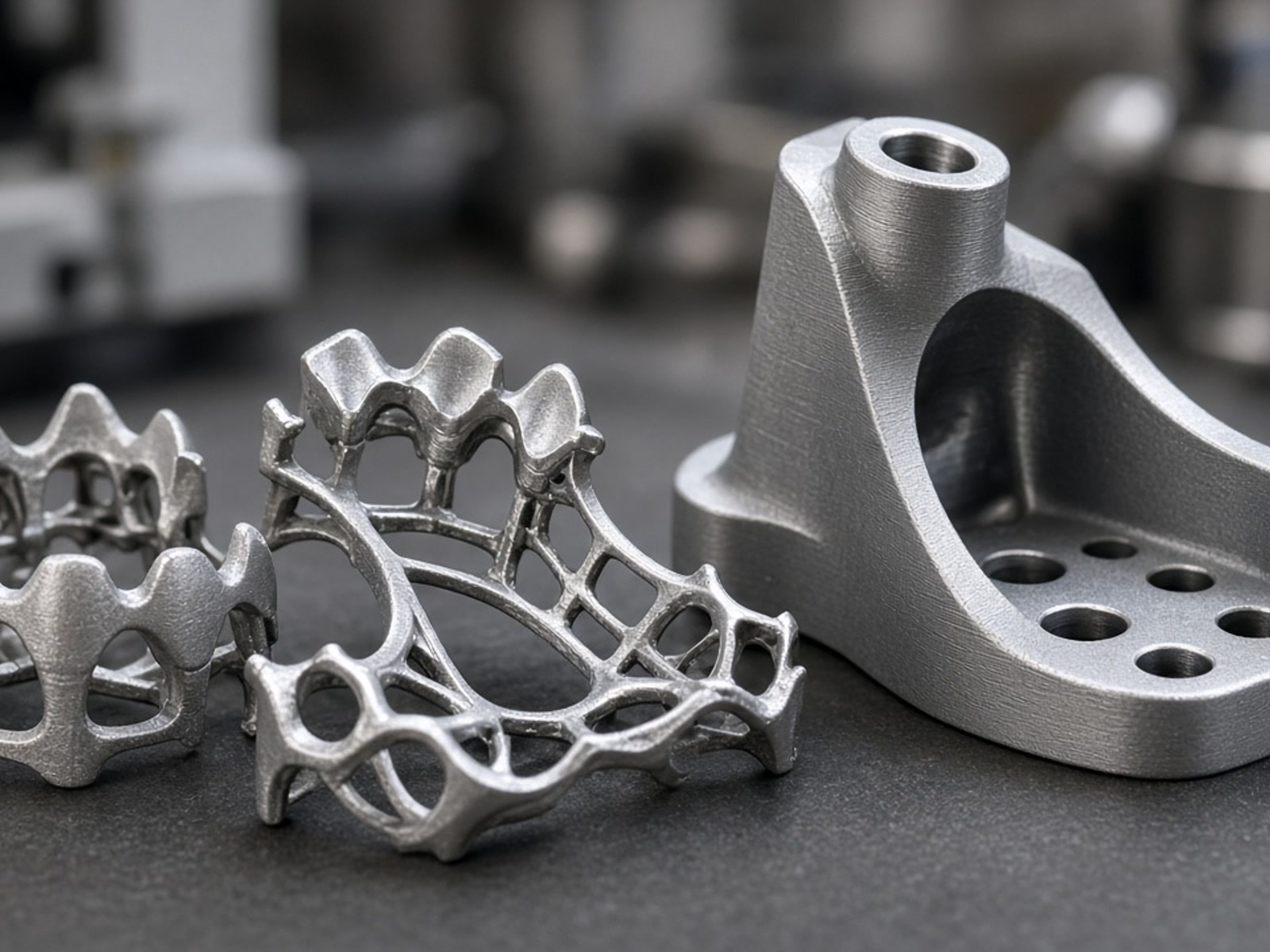
Cobalt Chrome (CoCr) is a high-performance superalloy widely recognized in industrial engineering for its exceptional thermal resistance, high tensile strength, and superior wear resistance. In additive manufacturing, it is primarily processed via Laser Powder Bed Fusion (L-PBF) for components that operate in extreme environments.
Metallurgical Benchmark
Material Characteristics of Cobalt Chrome
Cobalt Chrome alloys are selected for specific physical and mechanical attributes that distinguish them from conventional stainless steels and tool steels.
Thermal Stability
Maintains mechanical strength and creep resistance even at elevated service temperatures, making it suitable for hardware exposed to intense heat.
Corrosion & Wear Resistance
Demonstrates superior resistance to severe chemical degradation, mechanical friction, and continuous abrasive contact over prolonged duty cycles.
High Strength-to-Weight
Yields high structural durability that enables lightweighting through thin-walled sections or complex internal geometries without sacrificing structural integrity.
Biocompatibility & Inertness
In industrial contexts, this metallurgical characteristic underscores the alloy's extreme chemical inertness, low ion leaching, and environmental stability.
Industrial Applications
Where Cobalt Chrome Is Specified
Engineers evaluate Cobalt Chrome superalloys when standard alloys or structural plastics fail to meet rigorous operational profiles.
High-Temperature Components
Specified for hardware exposed directly to hot gas paths, exhaust passages, and cyclic thermal shock where structural deformation must be avoided.
Wear-Resistant Hardware
Applied in mechanical mechanisms that undergo continuous contact, severe friction, or impingement by abrasive media without lubrication.
Complex Fluid Handling
Integrated into custom impellers, fuel nozzles, manifold blocks, and specialized valve manifolds featuring conformal channels and aggressive chemical exposure.
Demanding Structural Assemblies
Engineered for structural brackets, mountings, and housings required to maintain high torsional and flexural rigidity in harsh or corrosive environments.
Design & Process Constraints
Engineering Considerations & Limitations
Because Cobalt Chrome is a specialized alloy manufactured primarily via laser melting, design teams must factor several production constraints into their evaluation.
Geometry & Stress Management
The thermal gradients in L-PBF induce high residual stresses. Designs require deliberate orientation and extensive support structures to prevent distortion during printing.
Secondary Machining Difficulty
The material's inherent hardness accelerates tool wear. CNC post-machining, precision tapping, and reaming operations are labor-intensive and drive up total project cost.
Surface Finish Realities
As-printed powder-bed surfaces exhibit granular textures. Precision mating surfaces, bearing fits, and fluid seals require post-build grinding, blasting, or polishing.
Unit Economics & Lead Time
High atomized powder raw material costs and slow L-PBF build speeds create a steep unit price profile compared to industrial polymer manufacturing methods.
Evaluating Your Material Strategy with RapidPrintParts
At RapidPrintParts, we focus on producing functional industrial components using our in-house FDM, SLA, SLS, and MJF production lines. While we do not operate metal 3D printing equipment in-house, our technical team regularly evaluates complex requirements to help engineering teams determine the optimal production path.
If your application demands high thermal threshold, chemical resistance, or structural rigidity, a full engineering review can identify whether a costly superalloy is strictly required, or if high-performance engineering polymers—such as PEEK, PEKK, or PEI/ULTEM—can meet functional specifications with shorter turnarounds and lower unit costs.
- Selective Laser Sintering (SLS)
- Multi Jet Fusion (MJF)
- Industrial FDM (High-Performance Polymers)
- Stereolithography (SLA)
Project Consultation
Evaluate Your Part Specifications
Are you currently evaluating materials for a demanding industrial environment? Submit your CAD models and operating criteria below. Our engineering team will review your application requirements to determine the optimal manufacturing process and material selection.
Contact RapidPrintParts
Get in Touch
We are here to answer your questions about industrial additive manufacturing and functional 3D printed parts. Reach out to us through the following methods:
Email: [email protected]
Address: No. 17-1, Guanlan Avenue, Longhua District, Shenzhen, Guangdong Province, Shenzhen 3D Printing Industrial Park