
Ti6Al4V 3D Printing: Material Properties and Industrial Considerations
Ti6Al4V is a widely referenced titanium alloy in discussions of metal additive manufacturing. This page provides factual information on its characteristics, common uses, and practical selection considerations for engineering teams evaluating high-performance materials.
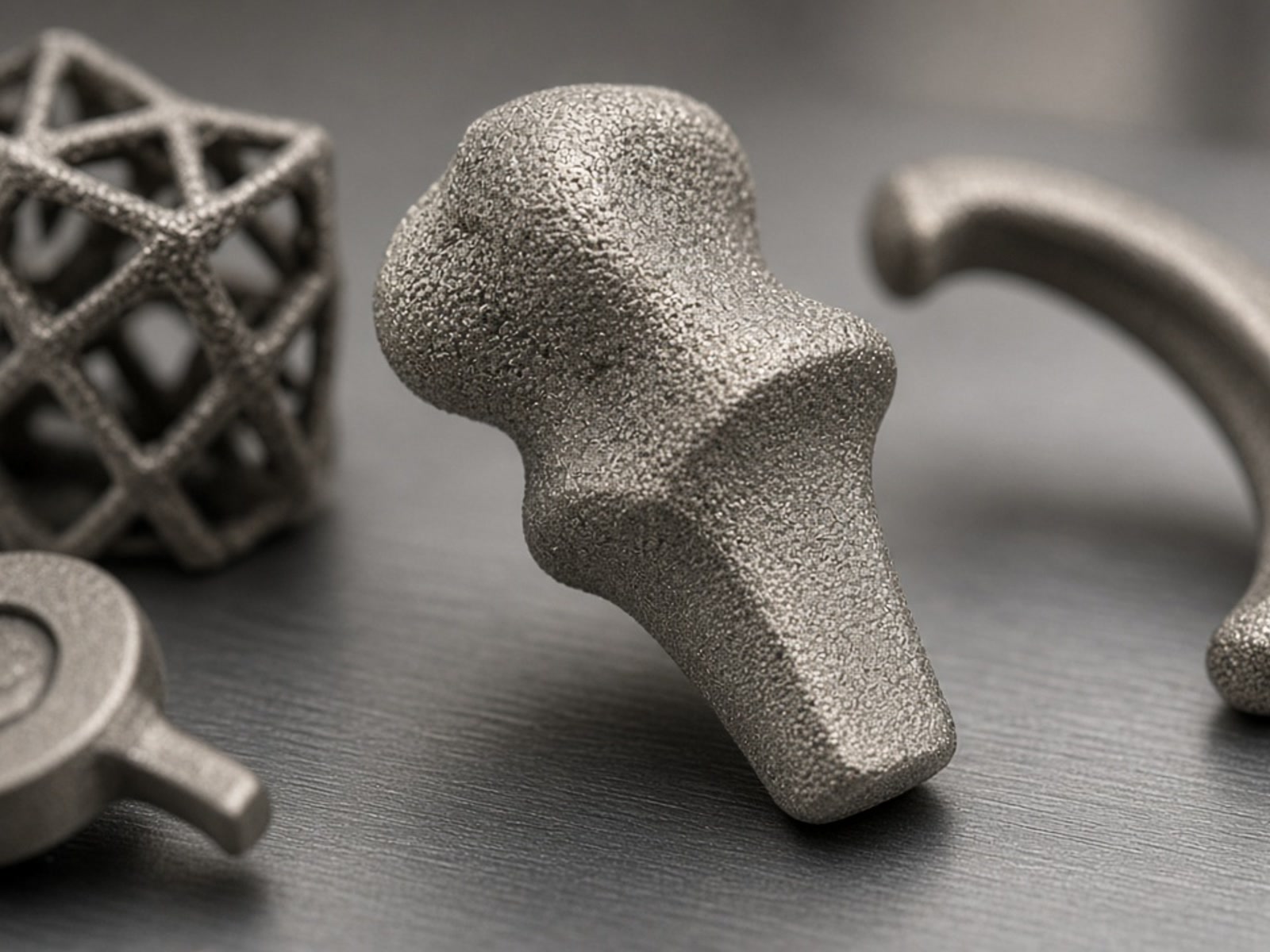
Key Material Properties
Ti6Al4V offers a combination of high strength-to-weight ratio, corrosion resistance, and elevated-temperature performance. These attributes make it relevant for applications where weight reduction and durability are priorities. However, actual performance depends on processing method, post-processing, and part geometry.
~900 MPa
Typical Reference Tensile Strength
Reference value; actual results vary with processing.
~4.43 g/cm³
Typical Reference Density
Contributes to a high strength-to-weight ratio.
Corrosion
Resistance
Suited to demanding service environments.
Elevated T
Temperature Performance
Retains useful properties at higher temperatures.
Challenges in Additive Manufacturing
Producing Ti6Al4V components via powder-bed or directed-energy processes involves factors such as powder handling, residual stress management, and heat treatment requirements.
-
Parts often require support structures and controlled atmospheres.
-
Subsequent machining or HIP processing is often needed to achieve desired mechanical properties.
-
Guaranteed tolerances and surface finishes require engineering review because results vary with build parameters and equipment.
Typical Industrial Applications
Ti6Al4V is frequently considered for:
Structural Brackets and Housings
Used in automation equipment.
Lightweight Replacement Components
For machinery where mass reduction matters.
Functional Prototypes
Requiring high specific strength.
These uses align with low-volume or bridge-production scenarios where traditional subtractive methods may be slow or costly. Quantity, operating temperature, load conditions, and chemical exposure remain essential inputs for any material decision.
Selection Factors and Limitations
When evaluating Ti6Al4V 3D printing, engineers typically review:
Mechanical Loads
Required mechanical loads and temperature range.
Compatibility
Corrosion or chemical compatibility needs.
Tolerances & Finish
Target tolerances and surface finish requirements.
Quantity
Overall quantity and repeatability expectations.
Metal additive processes are not part of RapidPrintParts’ in-house capabilities, which focus on FDM/FFF, SLA, SLS, and MJF using polymer and composite materials. For projects involving titanium alloys, an engineering review can help determine whether reinforced polymers such as PA-CF, PEEK, or PEI/ULTEM may meet functional requirements within available processes.
Next Step: Engineering Review
RapidPrintParts evaluates functional-part requirements including material performance, load, temperature, tolerance, and quantity before recommending a process. Provide CAD files, application details, and performance targets for an assessment of suitable polymer-based solutions.
Start Your Engineering Review
Share your application details and performance targets. Our team will assess suitable polymer-based solutions within our available processes.
Email: [email protected]
Address: No. 17-1, Guanlan Avenue, Longhua District, Shenzhen, Guangdong Province, Shenzhen 3D Printing Industrial Park
Contact RapidPrintParts
Get in Touch
We are here to answer your questions about industrial additive manufacturing and functional 3D printed parts. Reach out to us through the following methods:
Email: [email protected]
Address: No. 17-1, Guanlan Avenue, Longhua District, Shenzhen, Guangdong Province, Shenzhen 3D Printing Industrial Park