
High Temperature Resin 3D Printing for Industrial Applications
Maintain structural integrity and dimensional stability under elevated thermal loads. Utilizing industrial Stereolithography (SLA) technology and engineering-grade thermoset resins, RapidPrintParts produces functional prototypes, thermal-environment test parts, and precision manufacturing aids.
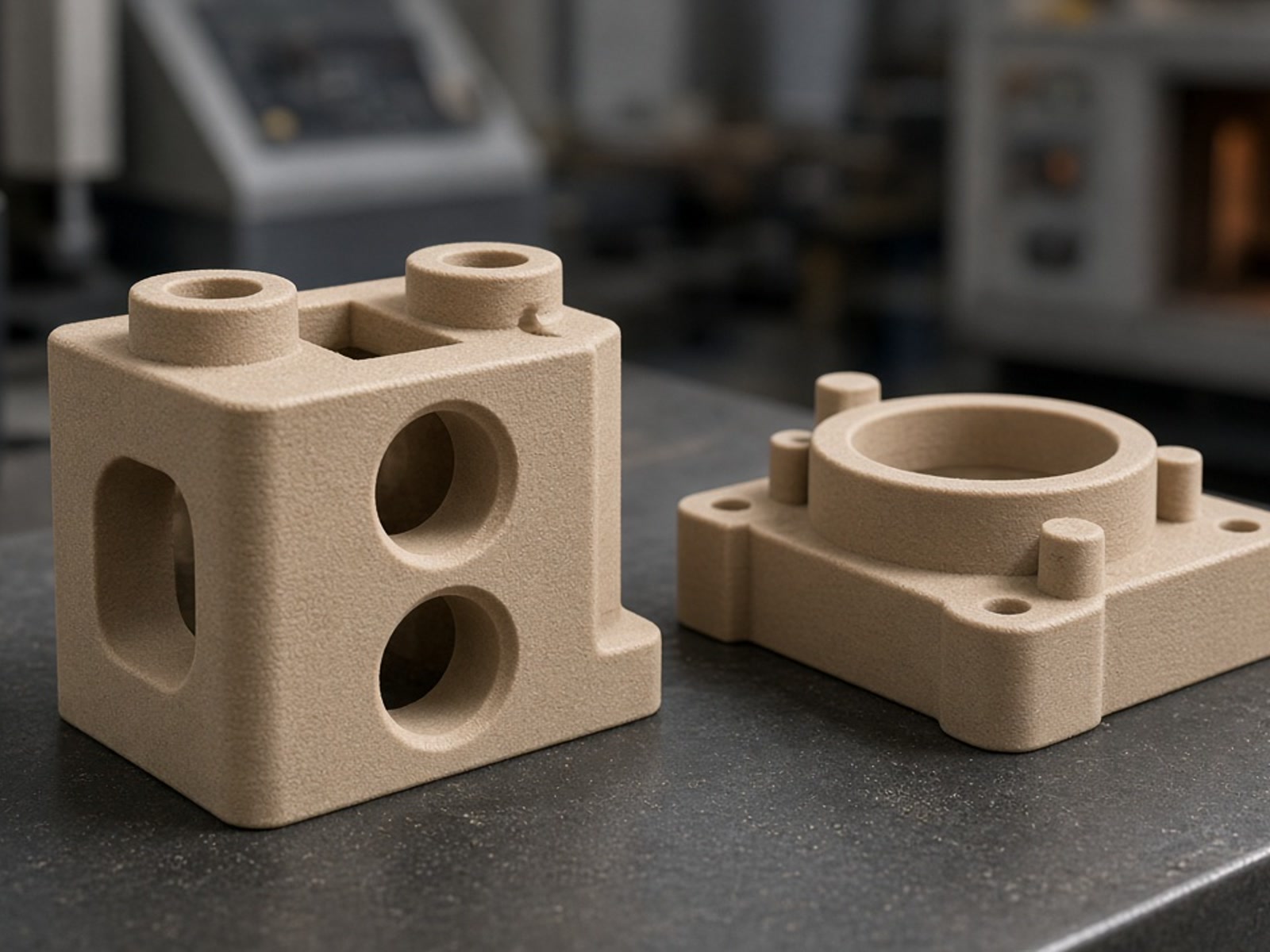
Understanding High Temperature Engineering Resins
Engineering resins used in SLA processes are thermoset materials. Once cured, they undergo a chemical cross-linking process that prevents them from remelting under thermal exposure. High temperature formulations are developed to push thermal thresholds significantly beyond standard prototyping polymers.
Thermal Stability
Engineered to resist deflection and deformation under continuous or cyclic thermal loads, offering higher Heat Deflection Temperatures (HDT) compared to standard ABS-like or transparent resins.
High Rigidity
Characterized by high tensile strength and stiffness. Due to their cross-linked network, these materials exhibit lower elongation at break, prioritizing structural retention over impact resilience.
Fine Detail & Surface Finish
Leverages photopolymer resin stereolithography to deliver sharp edge retention, micron-level feature resolution, and exceptionally smooth surface quality suitable for fluid channels and mating faces.
Common Industrial Applications
High temperature resin printing provides validation pathways across critical sectors requiring thermal verification or rapid tooling without high initial mold tooling commitments.
Rapid Tooling & Inserts
Low-pressure injection mold inserts, thermoforming tools, and vacuum forming dies where the core must withstand direct contact with molten or heated processing polymers.
Electronic Housings
Prototyping rigid protective covers and internal brackets for heat-generating hardware, power electronics, motor units, and internal component housings.
Fluid & Gas Handling
Validation-grade manifolds, valves, mixing chambers, and distribution nozzles carrying heated liquids or gases during hot-flow bench testing and functional reviews.
Environmental Testing
Mounting fixtures and functional air-path geometries tested inside climate chambers, high-heat ducts, or wind tunnels where standard polymers would warp.
Jigs, Fixtures & Oven Aids
Custom assembly nests, positioning blocks, and inspection frames deployed alongside thermal curing ovens, wave soldering operations, or heat-producing production machinery.
Technical Capabilities and Tolerances
RapidPrintParts operates industrial-grade stereolithography equipment configured for high-stability thermoset resins. Each component follows disciplined curing parameters to fully activate material cross-linking.
Engineering Tolerance Notice
Achievable tolerance depends on geometry, wall thickness orientation, and curing shrinkage. Guaranteed precision requires project-specific CAD evaluation.General SLA reference; formal engineering review of CAD data is required for critical dimensions.
Secondary thermal treatment elevates cross-linking density to achieve published Heat Deflection Temperatures.
Design & Material Selection Considerations
High-temperature resins exhibit unique structural trade-offs. Review these critical parameters during the CAD preparation stage to ensure component longevity.
Heat Deflection Temperature (HDT)
Distinguish between published HDT at 0.45 MPa and 1.82 MPa. High thermal loads combined with mechanical stress lower the effective deflection threshold significantly compared to unloaded conditions.
Brittleness & Impact Resistance
Elevated thermal properties reduce ductile compliance. Avoid thin cantilevers, aggressive snap-fit features, or designs subject to sharp mechanical shock and high-vibration environments.
Uniform Wall Thickness
Maintain uniform cross-sections wherever possible. Abrupt wall transitions induce uneven internal stresses during UV exposure and subsequent secondary thermal baking, causing part warpage.
Environmental Exposure
Account for chemical contact, humidity, and direct UV light alongside heat. Prolonged environmental exposure can degrade polymer bonds or alter dimensional limits over operational lifespans.
Engineering Review & Quality Support
RapidPrintParts prioritizes functional industrial applications. Our technical team evaluates every submission against operating thermal loads, geometry, and mechanical demands.
Inspection Documentation
Dimensional verification reports provided according to drawing requirements.
Material Traceability
Material documentation and Certificates of Conformity (CoC) available on request.
First Article Inspection (FAI)
Comprehensive FAI support for bridge-manufacturing and pilot validation batches.
Submit Project for Technical Review
Receive technical evaluation and tolerance feedback from our engineering team.
Contact RapidPrintParts
Get in Touch
We are here to answer your questions about industrial additive manufacturing and functional 3D printed parts. Reach out to us through the following methods:
Email: [email protected]
Address: No. 17-1, Guanlan Avenue, Longhua District, Shenzhen, Guangdong Province, Shenzhen 3D Printing Industrial Park