Industrial Additive Manufacturing
Nylon 3D Printing
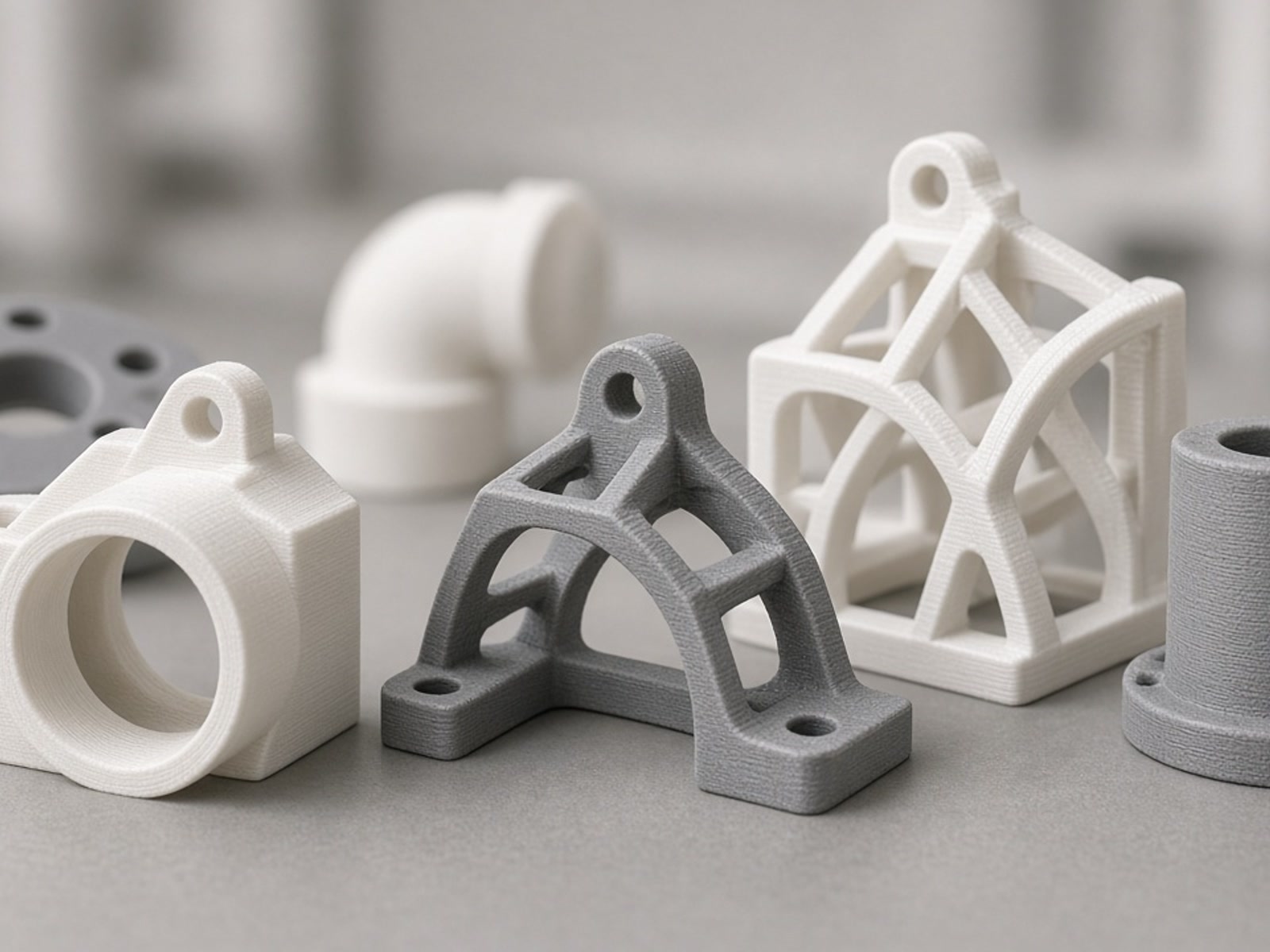
Nylon 3D printing produces tough, functional components for industrial use. At RapidPrintParts, nylon parts are manufactured using SLS and MJF processes with PA12 and PA11 materials — suited to complex geometries that are difficult or uneconomical to produce with traditional manufacturing.
- SLS Machines
- 10
- MJF Machines
- 4
- Materials
- PA12 / PA11
- SLS Tolerance
- ±0.3 mm
Nylon Materials Offered
RapidPrintParts processes PA12 and PA11 through SLS and MJF. Both materials support low-volume end-use parts and bridge production before tooling.
PA12
Provides good strength and chemical resistance for mechanical parts.
PA11
Offers higher impact resistance and flexibility in certain applications.
Core Processes for Nylon Parts
Two complementary powder-bed processes cover complex, durable nylon components without support structures.
SLS
10 machinesSelective laser sintering works with PA12 and PA11 to create complex, durable nylon parts without support structures.
- Build Envelope
- Approx. 380 × 380 × 600 mm
- Tolerance Reference
- ±0.3 mm or ±0.3%
MJF
4 machinesMulti jet fusion processes PA12, PA11, and PA12 GF for low-volume functional nylon components.
- Build Envelope
- Approx. 380 × 284 × 380 mm
- Tolerance Reference
- ±0.2 mm or ±0.3%
Guaranteed tolerance requires engineering review.
Best-Fit Applications
Nylon 3D printing aligns with RapidPrintParts's focus on functional parts for low quantities and rapid iteration.
Prototyping
Functional prototypes
Tooling Aids
Jigs and fixtures
Mechanical
Mechanical components and replacement parts
Robotics
Robot EOAT
Enclosures
Housings and ducts
Structural
Brackets
Who We Serve
Machinery OEMs, robotics integrators, industrial hardware developers, and MRO teams that need low quantities or rapid iteration.
Practical Selection Factors
Engineers evaluate the following points before a process is recommended.
- Application and operating environment
- Quantity and repeat demand
- Load and temperature requirements
- Critical dimensions
- Finish needs
- Target lead time
Post-Processing Options
Options may include blasting, dyeing, inserts, tapping, drilling, and CNC secondary machining when agreed for the project.
Design Inputs and Limitations
File Requirements
CAD files in STEP/STP format, plus a 2D drawing when tolerances are critical.
Design Inputs
Material, load, temperature, and quantity.
Best-Fit Volume
Best suited to complex or low-volume parts rather than very high volumes better served by molding.
All projects undergo engineering review to confirm suitability.
Request an Engineering Review
Provide your part application, material requirements, quantity, and timeline for a technical assessment. RapidPrintParts evaluates each project against actual operating conditions before recommending a process.
Prefer email?
[email protected]Contact RapidPrintParts
Get in Touch
We are here to answer your questions about industrial additive manufacturing and functional 3D printed parts. Reach out to us through the following methods:
Email: [email protected]
Address: No. 17-1, Guanlan Avenue, Longhua District, Shenzhen, Guangdong Province, Shenzhen 3D Printing Industrial Park