
Maraging Steel 3D Printing: An Overview of High-Performance Tooling Materials
Maraging steel is a high-strength, high-toughness steel alloy frequently utilized in additive manufacturing for demanding industrial applications. In the context of 3D printing—typically through Laser Powder Bed Fusion (LPBF) or Direct Metal Laser Sintering (DMLS)—maraging steel (often referred to as Grade 300 or 1.2709) provides a unique combination of mechanical performance and ease of post-processing.
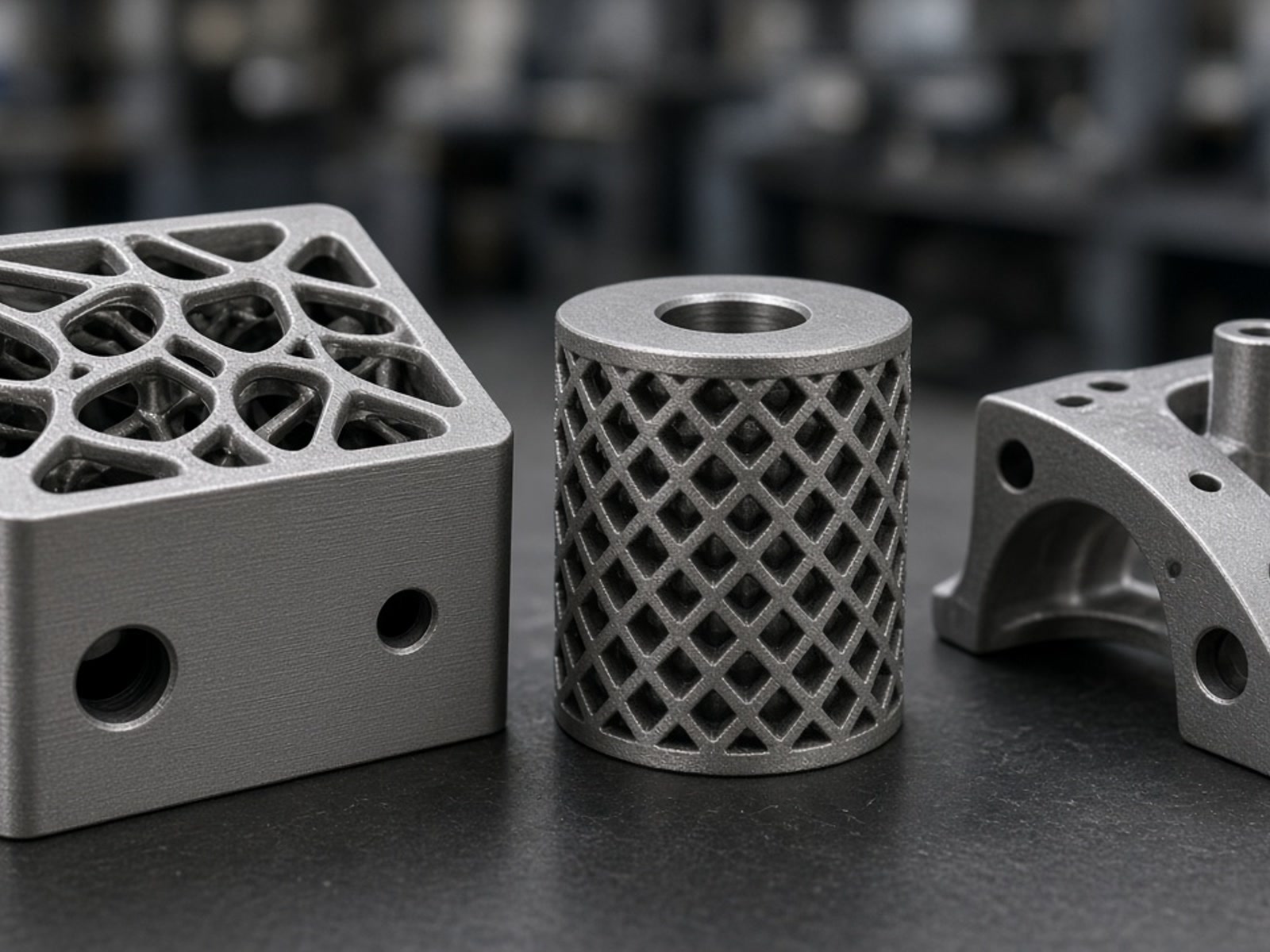
What is Maraging Steel (18Ni-300)?
Maraging steel is characterized by its high nickel content (typically 18%) and the absence of carbon as a primary hardening agent. Unlike traditional carbon steels, it achieves its strength through the "maraging" process—a combination of martensitic transformation followed by age-hardening.
In 3D printing, this material is valued for its excellent weldability and predictable behavior during the thermal cycles of the printing process. This makes it a preferred choice for complex geometries that would be difficult or impossible to produce via traditional tool steel machining.
At a Glance
- Common Designations
- Grade 300 / 1.2709 / 18Ni-300
- Typical Processes
- LPBF, DMLS
- Hardening Mechanism
- Martensitic transformation followed by age-hardening
Key Properties of Additively Manufactured Maraging Steel
Maraging steel 3D printing is selected when standard industrial polymers or aluminum alloys cannot meet the load or temperature requirements of an application. Key characteristics may include:
High Tensile Strength
After heat treatment, parts can reach high ultimate tensile strength levels, making them suitable for high-stress environments.
Exceptional Toughness
Unlike many high-hardness steels which become brittle, maraging steel maintains significant fracture toughness.
Heat Treatability
Parts are typically printed in an annealed state and can be aged to reach a target hardness (often around 50-55 HRC).
Dimensional Stability
The material exhibits minimal dimensional change during the aging process, which is critical for precision industrial components.
Industrial Applications for Maraging Steel Parts
The primary driver for using maraging steel in additive manufacturing is the ability to integrate complex internal features into high-strength components.
Tooling and Injection Molding
One of the most common applications is the production of injection mold inserts with conformal cooling channels. These internal fluid paths follow the contour of the mold cavity, allowing for more uniform cooling and reduced cycle times. This complexity is often unachievable through traditional deep-hole drilling.
High-Stress Mechanical Components
For machinery OEMs and robotics integrators, maraging steel is used for heavy-duty brackets, gears, and structural connectors that require higher fatigue resistance than aluminum or high-performance polymers like PEEK or carbon-filled nylon.
Jigs and Fixtures
In high-wear assembly environments, maraging steel provides the durability needed for long-term use in heavy-industry fixtures where polymer alternatives might wear prematurely or fail under heavy clamping forces.
Design and Post-Processing Considerations
Designing for maraging steel 3D printing requires an understanding of the specific constraints of metal powder bed processes. Each of the following factors shapes how a part is designed, oriented, and finished.
-
1
Support Structures
Unlike SLS or MJF polymer printing, metal printing requires sacrificial support structures to manage thermal stresses and prevent part warping.
-
2
Surface Finish
As-printed parts have a matte, slightly grainy surface. For functional mating surfaces or seal interfaces, secondary CNC machining or grinding is typically required.
-
3
Heat Treatment
To achieve maximum mechanical properties, parts must undergo a specific aging cycle. This requires engineering review to ensure the thermal cycle does not introduce unwanted stress.
-
4
Secondary Operations
Maraging steel is relatively easy to machine compared to other tool steels, allowing for the addition of high-tolerance holes, threads, and polished finishes after the 3D printing process is complete.
Material Selection and Engineering Review
Choosing the right material for an industrial part involves balancing mechanical requirements with production lead times and costs. While maraging steel offers extreme strength, many functional requirements for jigs, fixtures, and robot EOAT (End-of-Arm Tooling) can be met using high-performance polymers or composites.
At RapidPrintParts, we focus on industrial-grade polymer 3D printing to provide functional prototypes and low-volume production parts. Before finalizing a material choice, we recommend an engineering review of the operating environment.
Review Checklist
-
Load and Stress
Does the part require the extreme tensile strength of steel, or can a carbon-fiber-reinforced polymer (PA-CF) provide sufficient rigidity?
-
Operating Temperature
Will the part be exposed to temperatures that exceed the glass transition temperature of engineering resins or thermoplastics?
-
Weight Constraints
For applications like robotics, can the part be lightweighted using SLS or MJF processes to improve cycle speeds?
Evaluate Your Project with Our Engineering Team
For projects requiring high-detail validation, functional testing, or bridge production, our team evaluates your STEP/STP files and 2D drawings to recommend the most efficient process and material for your specific application.
What We Focus On
- Industrial-grade polymer 3D printing processes including FDM, SLS, MJF, and SLA
- Functional prototypes and low-volume production parts
- Material transition guidance between polymers and metals
- Review of STEP/STP files and 2D drawings for process and material selection
Request a Quote
Share your application details and our team will review your files to recommend the most efficient process and material for your project.
Contact RapidPrintParts
Get in Touch
We are here to answer your questions about industrial additive manufacturing and functional 3D printed parts. Reach out to us through the following methods:
Email: [email protected]
Address: No. 17-1, Guanlan Avenue, Longhua District, Shenzhen, Guangdong Province, Shenzhen 3D Printing Industrial Park