Industrial 3D Printing Painting and Surface Finishing
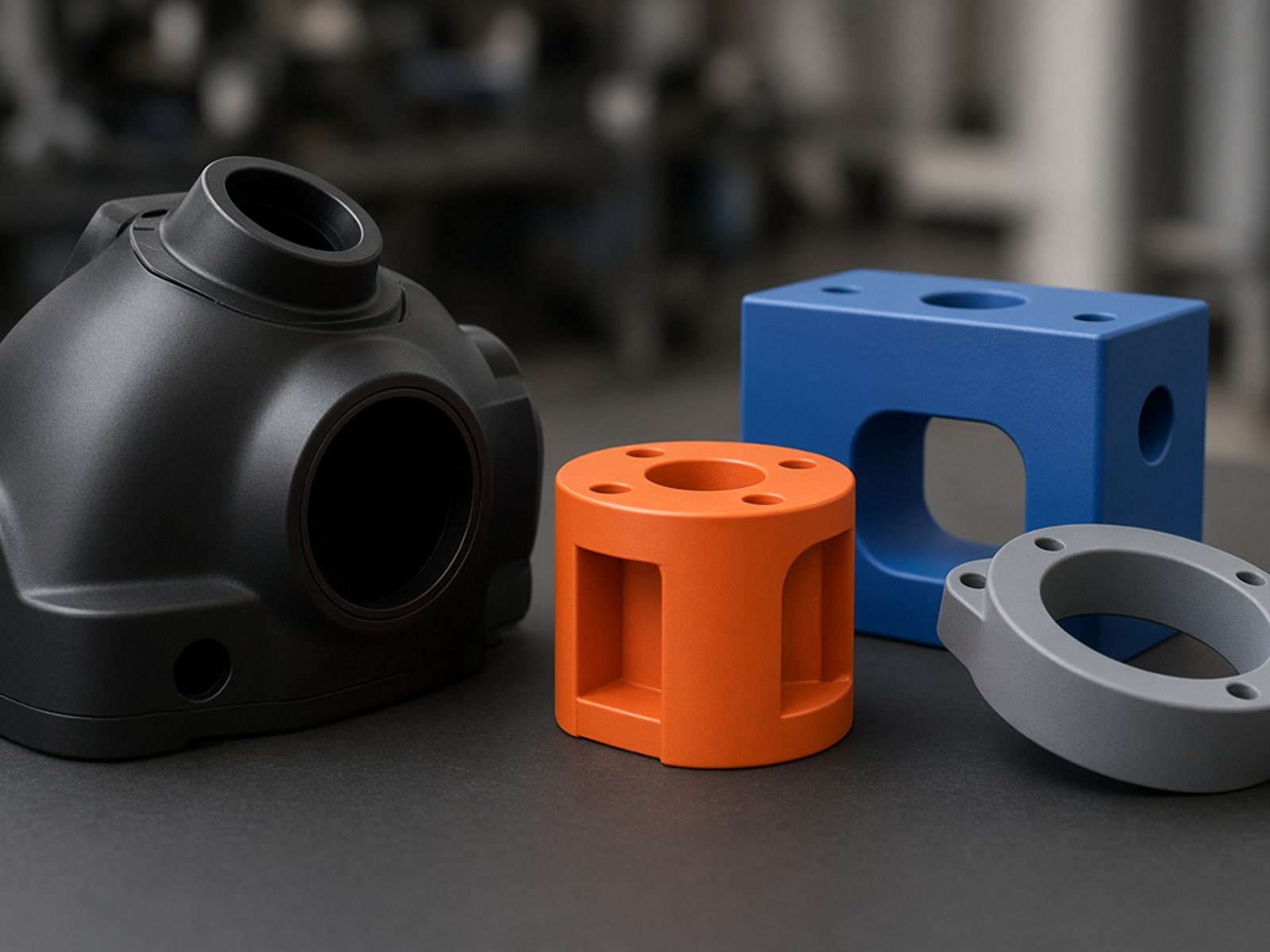
Additive manufacturing delivers complex geometries and functional performance, but the raw surface of a 3D printed part may not always meet the aesthetic or environmental requirements of the final application. Painting is a critical post-processing step for specific color requirements, UV stability, and a professional appearance on industrial components.
At RapidPrintParts, painting is integrated with our core in-house processes—FDM, SLA, SLS, and MJF—to deliver finished parts ready for assembly, field testing, or low-volume production.
Painting for Industrial 3D Printing Processes
The effectiveness and preparation required for painting depend heavily on the base material and the additive process used to create the part.
SLA
SLA resins produce high-detail parts with naturally smooth surfaces. Because layer lines are minimal, SLA parts typically require the least surface preparation before painting—ideal for appearance models, fit-and-finish validation, and high-fidelity prototypes.
FDM
FDM parts printed in materials such as ABS, ASA, or PC exhibit visible layer lines. A high-quality painted finish typically requires mechanical sanding and priming. Once prepared, parts can be painted to match corporate branding or to add protection against the environment.
SLS & MJF
Nylon parts (PA12, PA11) from SLS or MJF are porous with a matte, grainy texture. While often dyed, painting provides a more opaque and uniform color—especially for a specific RAL or Pantone match. Preparation may include media blasting for better paint adhesion.
Functional Benefits of Painted Finishes
Beyond aesthetics, painting serves several functional roles in industrial applications—extending service life, sealing surfaces, and communicating information across the shop floor.
- UV Resistance
- Many 3D printing polymers, particularly certain resins and standard nylons, can degrade or discolor under prolonged sunlight. Industrial-grade coatings provide a protective barrier against UV radiation.
- Environmental Protection
- Painting seals the surface of porous parts such as those from MJF or SLS, improving resistance to moisture and certain chemicals.
- Color Coding and Branding
- For jigs, fixtures, and robot EOAT, painting allows clear color coding to assist operators or to align with corporate identity standards.
- Surface Uniformity
- Painting masks the stair-stepping effect of 3D printing and hides variations in material color, providing a consistent look across a batch of parts.
Design Considerations and Limitations
When specifying painting for 3D printed components, several engineering factors must be considered to protect fit, function, and long-term adhesion.
-
1
Dimensional Changes
Painting adds a thin layer of material to the surface. For high-precision components with tight tolerances (typically ±0.1 mm to ±0.3% depending on the process), the thickness of the primer and paint must be accounted for, especially on mating surfaces or threads.
-
2
Masking Requirements
If specific areas must remain unpainted—such as internal threads, electrical contact points, or press-fit bores—clear 2D drawings must be provided to indicate masking zones.
-
3
Geometry Constraints
Extremely complex internal geometries or deep recesses may be difficult to coat evenly with spray-painting techniques.
-
4
Material Compatibility
Some high-performance polymers, such as PEEK or certain TPU grades, require specific primers or surface treatments to ensure long-term paint adhesion.
Quality and Engineering Review
Every project at RapidPrintParts begins with an engineering review to evaluate the operating requirements of the part, including load, temperature, and finish. Our quality support team can provide dimensional inspection reports and material documentation when agreed upon for the project.
For functional prototypes and low-volume production runs, we recommend providing a STEP/STP file along with a 2D drawing that specifies critical dimensions and finishing requirements.
Start Your Engineering ReviewWhat to Send With Your Request
- STEP/STP file for the part geometry
- 2D drawing with critical dimensions and finishing requirements
- Masking zones for threads, contacts, or press-fit bores
- Target color reference, such as a RAL or Pantone match
- Operating conditions: load, temperature, and environment
Request a Quote for Painted 3D Printed Parts
Contact our engineering team to review your project requirements for painted 3D printed parts and functional industrial components.
Contact RapidPrintParts
Get in Touch
We are here to answer your questions about industrial additive manufacturing and functional 3D printed parts. Reach out to us through the following methods:
Email: [email protected]
Address: No. 17-1, Guanlan Avenue, Longhua District, Shenzhen, Guangdong Province, Shenzhen 3D Printing Industrial Park