Aluminum 3D Printing: Processes, Alloys, and Industrial Considerations
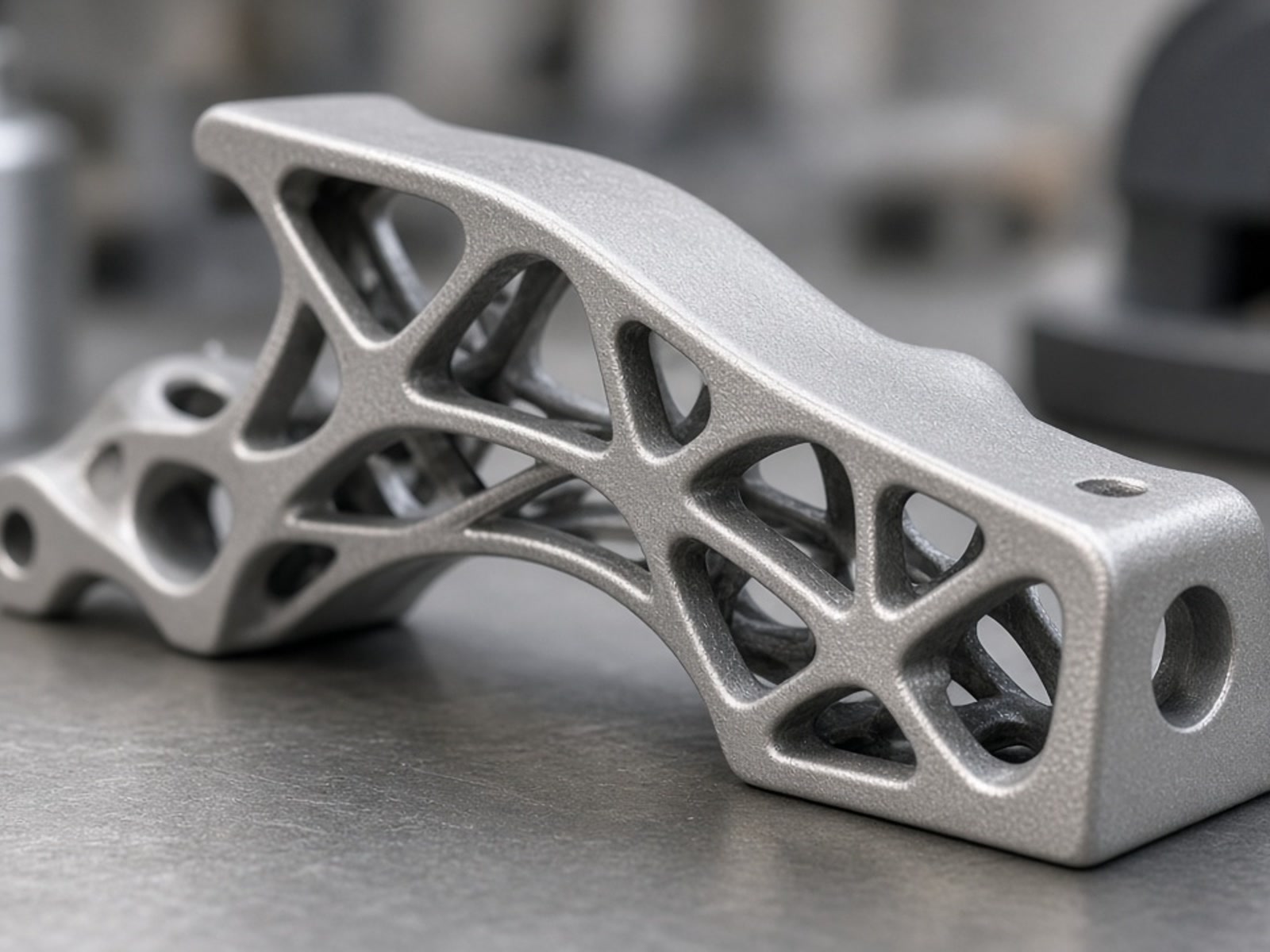
Aluminum 3D printing refers to the layer-by-layer fabrication of aluminum alloy components using powder-bed fusion or specialized metal additive processes. Distinct from polymer-based manufacturing, these methods demand precise atmospheric control, high-energy thermal management, and comprehensive post-processing workflows.
Material Science
Common Aluminum Alloys Used in Additive Manufacturing
AlSi10Mg remains the most widely referenced and implemented aluminum alloy in additive systems. Its near-eutectic composition provides an optimal balance of castability, high thermal conductivity, corrosion resistance, and mechanical strength across both as-built and heat-treated conditions.
Wrought-equivalent derivatives such as modified 6061 and 7075 formulations continue to appear in metallurgical research. While offering potential for higher specific strengths, their susceptibility to solidification cracking and hot tearing requires specialized powder chemistry and tight process optimization.
Thermal & Powder Parameters
Process Considerations for Aluminum Parts
Powder-bed fusion technologies, including Selective Laser Melting (SLM) and Direct Metal Laser Sintering (DMLS), are the predominant manufacturing routes for aluminum. Maintaining consistency requires rigid control over numerous physical variables.
Laser power, scan velocity, hatch spacing, and layer thickness interact directly with powder particle size distribution. Build-plate preheating is vital to mitigate high thermal conductivity and rapid dissipation.
Due to significant thermal gradients, sacrificial support structures are necessary to anchor features, conduct heat away from melt pools, and prevent catastrophic part distortion or recoater blade interference.
As-built components rarely meet final application criteria directly. Stress-relief annealing, Hot Isostatic Pressing (HIP) for internal void reduction, and secondary CNC machining are frequently deployed.
Design Engineering
Design Inputs and Selection Factors
Evaluating structural aluminum fabrication requires complete operational criteria. Standard design guidelines for metal additive systems differ substantially from subtractive CNC machining or casting approaches.
Minimum Wall Thickness
Design rules typically mandate a minimum wall thickness of 1–2 mm to prevent incomplete fusion, localized warping, or damage during post-process support extraction.
Internal Cavities & Depowdering
Unfused powder must have clear egress pathways. Closed channels or blind cavities must integrate design provisions for thorough powder clearing and flushing.
Horizontal Overhangs
Large horizontal down-skin surfaces must be avoided or supported to minimize sag, excessive surface roughness, and localized thermal accumulation.
Review Input Checklist
Engineers evaluating functional part feasibility must provide comprehensive parameters to establish material suitability:
- Operating Conditions: Static/dynamic loads, temperature ranges, and chemical exposure risks.
- Tolerancing Requirements: Critical mating dimensions (as-built accuracy varies with build angle and requires engineering review).
- Volume & Context: Unit count and whether the geometry replaces a legacy cast or billet-machined component.
- Optimization Target: Weight-reduction drivers, fluid topology, or conformal internal cooling paths.
Technical Constraints
Limitations and Practical Constraints
Metal additive manufacturing is not universally optimal for every functional design. Recognizing key industrial limitations is crucial to selecting an economically and functionally viable production route.
Cost & Handling
High capital equipment investment and rigorous inert-atmosphere safety protocols for fine reactive metal powders elevate operational costs compared to polymer systems.
Microstructural Porosity
Internal micro-porosity and build-layer anisotropy can impair high-cycle fatigue performance unless verified through non-destructive testing and heat treatment.
Surface Topology
As-built surface roughness is typically higher than machined or cast finishes, often necessitating secondary bead blasting, tumbling, or precision CNC skimming on critical datums.
Economic Feasibility
Low-volume or simple prismatic geometries rarely justify the qualification overhead of metal additive processes when alternative polymer or CNC processes match the requirement.
When to Request an Engineering Review
RapidPrintParts evaluates functional part requirements against available polymer processes before recommending any production route. Each application undergoes engineering review to confirm whether performance targets justify metal additive manufacturing or whether advanced polymer solutions offer a better balance of lead time, mechanical integrity, and overall cost.
- • 3D CAD models (STEP/STP format)
- • 2D drawings indicating critical tolerances and datums
- • Target operational loads, temperature, and environmental exposure
- • Target production volume and delivery timeline
Submit Functional Part Specifications
Provide project details for comprehensive engineering evaluation.
Contact RapidPrintParts
Get in Touch
We are here to answer your questions about industrial additive manufacturing and functional 3D printed parts. Reach out to us through the following methods:
Email: [email protected]
Address: No. 17-1, Guanlan Avenue, Longhua District, Shenzhen, Guangdong Province, Shenzhen 3D Printing Industrial Park